The German Blocked Account (Sperrkonto), Explained
A blocked account is money you own but can only draw down monthly. Here is what it proves, the order the steps must happen in, and where the current figure lives.
You have the admission letter from a German public university, an appointment window is open, and the family has the money ready: sitting in a fixed deposit at the local bank, held for years, earning interest. None of it counts as the maintenance proof Germany asks a student to show. A fixed deposit is not a blocked account, and that misunderstanding is a common and expensive way to lose a German study file.
At a glance
What it is
An account you own, with a capped monthly withdrawal
German name
Sperrkonto: German for blocked account
The amount
Set by the German authorities and revised periodically
Who needs one
Non-EU students, unless an accepted alternative covers it
Not the same as
A fixed deposit, savings balance or loan sanction letter
Correct order
Open, fund, confirm in writing, all before the appointment date
What a blocked account actually is
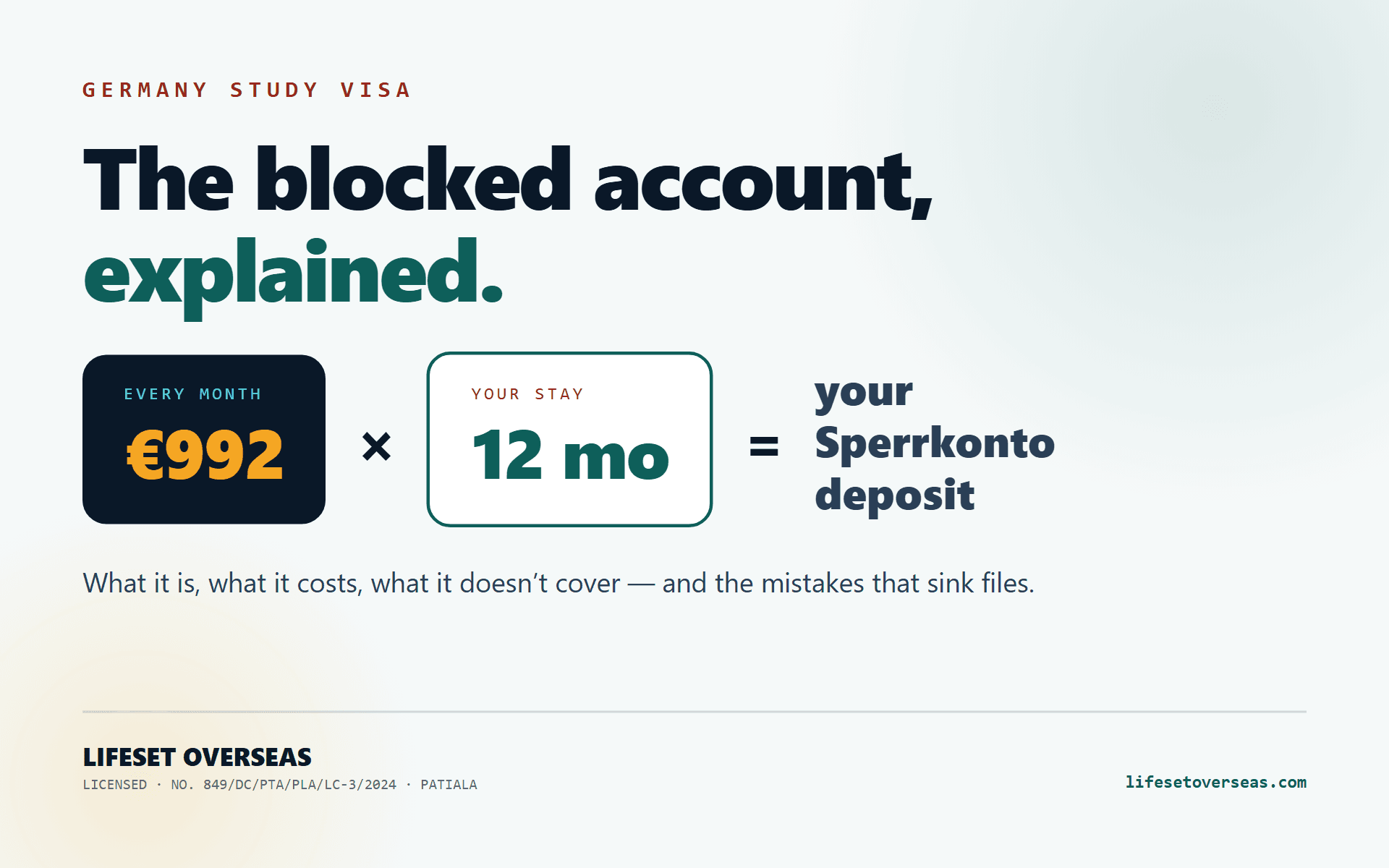
Deposited once, released monthly. The amount is set by the government and revised.
A blocked account is an ordinary bank account with one restriction attached. You may pay money in freely, but you may only take a set amount out each month. Germany uses it to answer one question before it issues a student visa: can this applicant pay for rent, food and daily life for the period ahead, without running out halfway through the course.
The word blocked worries families, and it should not. The money never stops being yours. It is not a fee, not a payment to the university, and nobody in Germany keeps it. You are agreeing to spend it at a controlled pace, which happens to be a sensible budget for a first year abroad anyway. The block is what makes the proof believable on paper.
The required amount is fixed by the German authorities, calculated per month of your intended stay, and revised from time to time. We deliberately do not print it here. A figure typed into a blog post in one year is wrong by the next, and a stale number on a visa page is worse than no number at all. Our German blocked-account calculator carries the current figure and multiplies it by your months.
Who needs one, and who does not
Non-EU students applying for a German national visa have to prove they can cover living costs, and the blocked account is the route Indian applicants normally use. Tuition is a separate matter. What you pay, if anything, depends on the state and the institution, and it has changed in some states in recent years: check the university's own fee page and budget from that, not from an assumption about public versus private. The living-cost proof is assessed on its own terms either way.
The rules do allow alternatives. A formal declaration of commitment from a sponsor resident in Germany, or a recognised scholarship that covers maintenance, can stand in place of the account. Both are narrower than they sound. A German-resident sponsor has their own local authority to satisfy first, and a scholarship letter has to make clear that it covers living costs and not tuition alone. The mission's own guidance sets out what it accepts, and that is the authority here. If neither alternative fits cleanly, the blocked account is the straight road.
Language-course and preparatory-college applicants are generally asked for the same kind of proof, scaled to the length of that course rather than a full degree. If your plan is a language year first and a degree afterwards, ask the mission before you file how many months it expects to see covered. Guessing that number and funding short is a slow, avoidable way to lose an appointment.
Where you can open one
There are two routes. A German bank can open a blocked account for you, typically with your paperwork verified through the German mission or a notary, and typically more slowly. Or you can use one of the specialist blocked-account providers built for international students, which run the whole thing online and often bundle health insurance with it. Both are legitimate. Neither is automatically better for your case.
We do not recommend a particular provider, and you should be wary of anyone who recommends one enthusiastically, because commission is common in this market. Only three things matter. The provider must be one your German mission accepts. The confirmation must arrive in the format that mission expects. And the account must be opened in the applicant's own name, not a parent's and never an agent's.
Check the mission's own website before you pay anyone. The list it publishes is the one that counts, and it changes from time to time. A provider your cousin used two years ago is not automatically still on it, and neither is one an agent pushes warmly. Verify first, then open.
The sequence, in the order it has to happen
Where the money came from matters as much as the balance.
Booking a slot and proving your funds are two different things. An appointment can usually be booked before the account exists, and slots are the scarce item, so take one when it appears. What you cannot do is arrive without the blocking confirmation. It has to be finished, confirmed in writing and printed before the appointment date, and the steps below run in this order because each depends on the one before it.
The transfer is the slow part, and it is the part nobody plans for. Money leaving India for study maintenance goes out under the Liberalised Remittance Scheme, your bank will have its own paperwork for the purpose of the remittance, the admission letter usually among it, and a first outward remittance from a branch that rarely handles them can take longer than the counter staff suggest. Start that conversation with your bank early, not in the week of your appointment.
Ask your provider and your bank what each of them needs before you start
Open the account in the applicant's own name, on the applicant's passport
Transfer the full required amount, allowing time for bank compliance checks
Wait for the written confirmation that the account is funded and blocked
Only with that letter in hand is the funds part of your file finished
What the confirmation letter must show
The confirmation, often called the blocking confirmation or Sperrbestätigung, is the document that gets read. Your money sitting in the account is not the proof. The letter is the proof. Read it line by line the day it arrives, because a mistake here tends to surface at the counter, where there is no time left to correct it and the slot is already gone.
Spelling is a common failure. Indian passports frequently carry a single-word name, an initial, or a surname printed in the given-name field. If the letter says Singh Harpreet and the passport says Harpreet Singh, get it corrected before filing rather than explaining it afterwards. Your name has to read the same on both documents, character for character.
Your full name, spelt exactly as it appears in your passport
Your passport number
The total amount held, and a clear statement that it is blocked
The monthly amount that will be released to you after arrival
That the account holder is you. Not a parent, relative or agent
Five mistakes that cost people the appointment
Start with the fixed deposit, because it is a common one. It is a real savings instrument, the family has often held it for years, and it genuinely feels like stronger evidence. It is still not the same thing. An FD can be broken tomorrow, so it shows what you hold today, not what you will still hold deep into the course. Germany asks for the blocked version precisely because it cannot be emptied on impulse.
Third-party transfers cause the quieter problem. Family money funds study files routinely and nobody expects otherwise, but the money has to be traceable from a documented family sponsor into the applicant's blocked account, with the relationship and the source visible. Funds that surface from an uncle's account, a friend's account or a currency dealer leave a gap in the trail that you cannot close on paper. Close it before you file, not afterwards.
Treating a fixed deposit, savings balance or loan sanction letter as equivalent
Starting the transfer late, then losing the slot waiting on the confirmation
Funding from a third party whose name and relationship are unexplained
Covering fewer months than the mission expects to see funded
Closing or drawing on the account before the visa is stamped
What happens to the money after you arrive
Nothing dramatic. Broadly, you land, register your address, open a normal current account with a German bank, and give the blocked-account provider those details so the monthly release can start. From then on the set amount reaches you each month, and it is yours to spend on rent, food, transport and insurance. You cannot pull the whole balance out early, and that restriction is the entire point of the arrangement. Your provider's own instructions govern the detail.
The money does not stop being yours if your plans change. Leaving Germany, withdrawing the application or losing your admission all lead to the account being closed and the balance returned, but on your bank's or provider's own process and terms, including any charges they apply. Ask what that involves before you open the account, so you are not reading the terms for the first time on a bad day.
Plan past the last covered month as well. The account funds your first stretch only, and a residence-permit renewal in Germany raises the same funding question again for the period ahead. How that is answered is a matter for the German authority handling it, and for whatever funding you can evidence at the time. Arranging employment abroad sits outside our licence, so we will not advise on jobs. We will tell you plainly that the renewal question is coming.
Questions people actually ask
It is a fixed monthly figure set by the German authorities, multiplied by the number of months your visa is meant to cover. We deliberately do not print that figure in this post, because it is revised periodically and a stale amount on a visa page is worse than none at all. Our German blocked-account calculator carries the current figure, does the multiplication for your months, and shows an indicative rupee conversion. Before you transfer anything, confirm it once against the German mission's own website. That page is the only version that counts on the day you file.
No. A fixed deposit, a savings balance, a property valuation or a sanctioned education loan is not a blocked account, and none of them replaces one for the German living-cost requirement. The difference is the block itself. An FD can be broken at any moment, so it evidences what you hold on the day, not what you will still hold months into the course. A loan sanction letter can support the wider funds story and may be asked for alongside. But unless one of the recognised alternatives applies to you, the maintenance proof sits in a blocked account in the student's own name.
Yes, parents commonly fund the account, but it must be opened in the student's name and the transfer must be documented. Nobody expects a school-leaver to have this money themselves, so a parent as the source is normal. Two things have to hold. The blocked account is in the applicant's name, never the parent's. And the remittance is traceable: your bank processes it under the Liberalised Remittance Scheme and will have its own paperwork for the purpose of the transfer. Keep the paper trail from the sender's account through to the blocked account continuous and easy to follow.
Open it early, whatever the booking calendar is doing. The two are separate: a slot can normally be booked before the account exists, and slots are the scarce item, so take one when it appears. The blocking confirmation is a document you present at the appointment, so the account has to be open, funded and confirmed in writing by that date. Work backwards from it. The provider has its own identity checks, your bank needs time to release an outward remittance, and the confirmation is only issued once the money has genuinely landed. None of those steps can be rushed by paying extra, which is why the transfer should start before you are counting days.
A refusal does not hand your money to anyone. Getting it back means closing the account, and that runs on your bank's or your provider's own process: normally a written closure request, the refusal document, and the account details you want the balance sent to. Charges and conditions vary by provider, so read those terms before you open the account rather than after, when they are new to you on a difficult day. If you are refused, the more valuable next step is understanding the stated reason properly before reapplying, because the same funds evidence will be looked at again.
No. One blocked account covers one applicant, in that applicant's name, for that applicant's months of stay. Siblings and friends attending the same university each need their own account and their own confirmation letter. Splitting a single account between two people fails at the first check, because the letter names one holder and states one monthly release. A spouse or child joining you is a different question: family maintenance is assessed under its own rules rather than the student requirement, so ask the mission which proof applies to them instead of assuming.
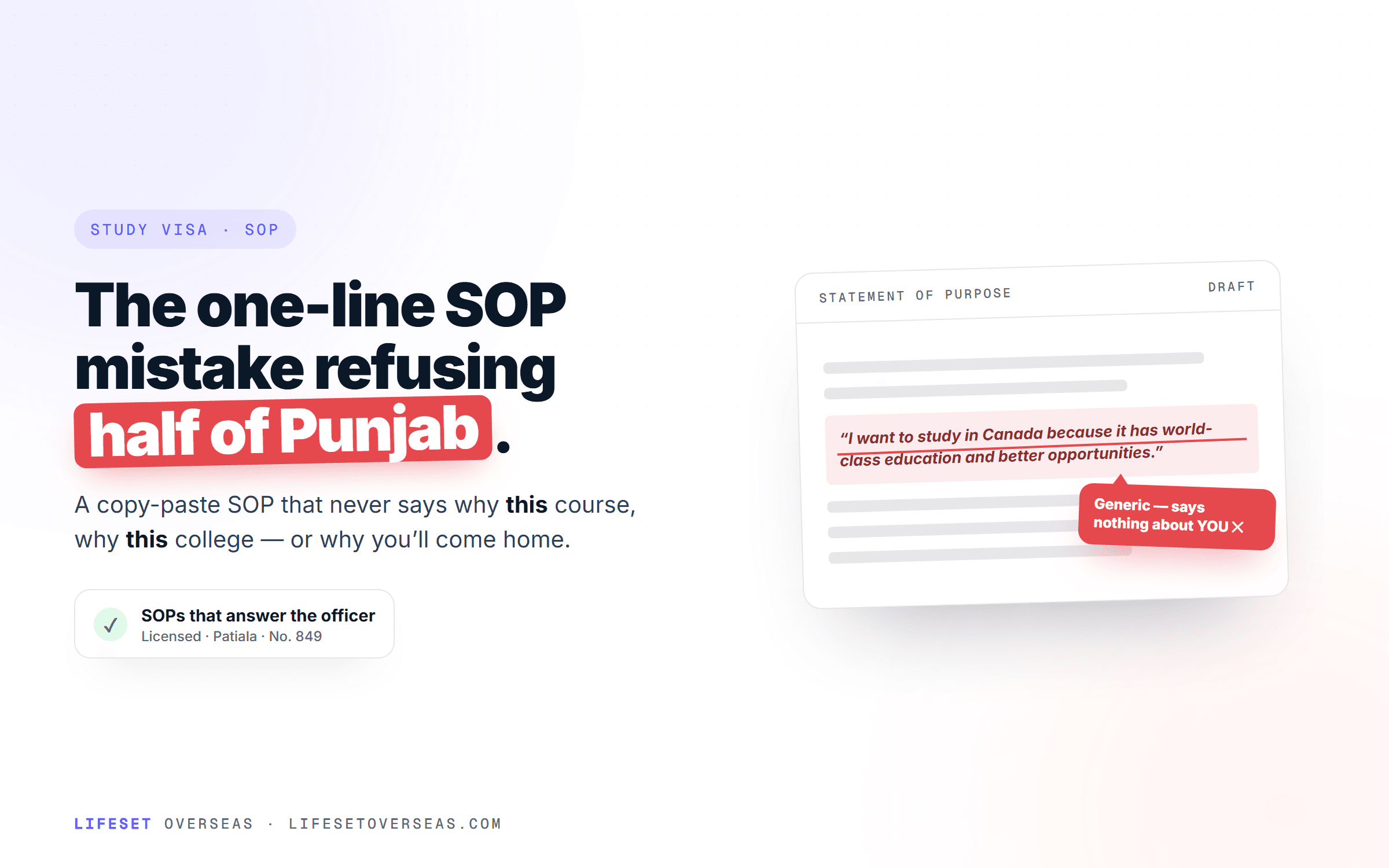
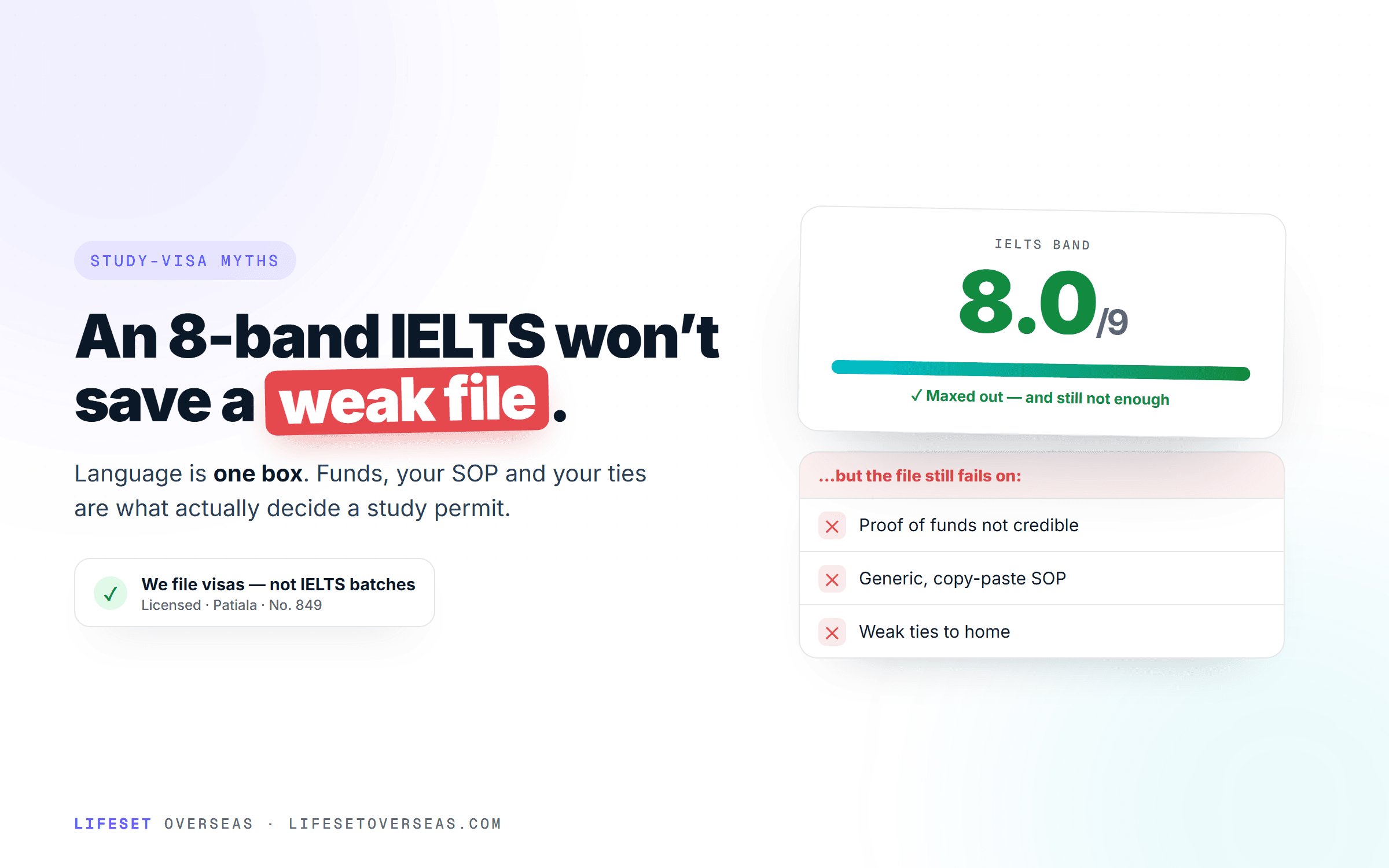
No. Funds are one requirement among several, and the decision rests with the visa officer. A properly funded blocked account removes one common reason for refusal, but it says nothing about your admission, your academic progression, your language preparation, or whether the course makes sense against what you studied before. Be ready to explain why this subject, why this university, and why Germany at all. Prepare those answers with the same seriousness you gave the money. Anyone telling you the blocked account guarantees the outcome is selling you something.
We do not sell, operate or take commission on blocked accounts. We make sure yours is opened in the right name, at the right time, and confirmed in the format your mission accepts. Lifeset Overseas is a licensed consultancy in Patiala, Consultancy Licence No. 849/DC/PTA/PLA/LC-3/2024. One named officer handles your file from start to finish. Our fees are published and fixed with 18% GST already inside the quoted number, and embassy or VFS charges are passed on at cost. You also get an honest verdict before you pay: file it now, fix this first, or do not apply.
Want this checked before you file? Message us on WhatsApp and a consultant will read your case and tell you honestly where you stand: file it now, fix this first, or do not apply yet. Fixed published fees, GST already inside the number quoted, and embassy charges passed on at cost.
What to do next
Study abroad services
From a quick file review to the full student journey — shortlisting, SOP, IELTS and visa.
We never predict an outcome or promise a visa. We tell you what your file says and what can be fixed.
Talk to a consultant about your case
Read this article? Now tell us about your situation.
We’ll WhatsApp you within 4 working hours with an honest read on your file and the realistic next steps. Licensed, fixed-fee, and one consultant from first call to decision.
Read the article? Message us on WhatsApp with your situation — a consultant from our Punjab-licensed consultancy gives you an honest read and the next step.