The €30,000 Schengen Insurance Rule, Explained Without the Jargon
Travel insurance is the cheapest document in a Schengen file — and one of the easiest ways to spoil one. What the policy must cover, the mistakes that void it, and how to buy it right the first time.
On every Schengen checklist there is one line that families treat as a formality, bought last, read never: travel insurance. Then a policy with the wrong dates quietly undermines an otherwise solid file, and the family is back at our Nabha Road desk asking what went wrong. So here is the €30,000 rule, explained properly.
Why insurance is mandatory: this is law, not a consulate's mood
Schengen travel insurance is not an upsell and not an optional extra. It is written into the EU Visa Code, the regulation every Schengen consulate applies. An application for a short-stay visa must include proof of adequate travel medical insurance. No policy, no complete file.
The minimum coverage
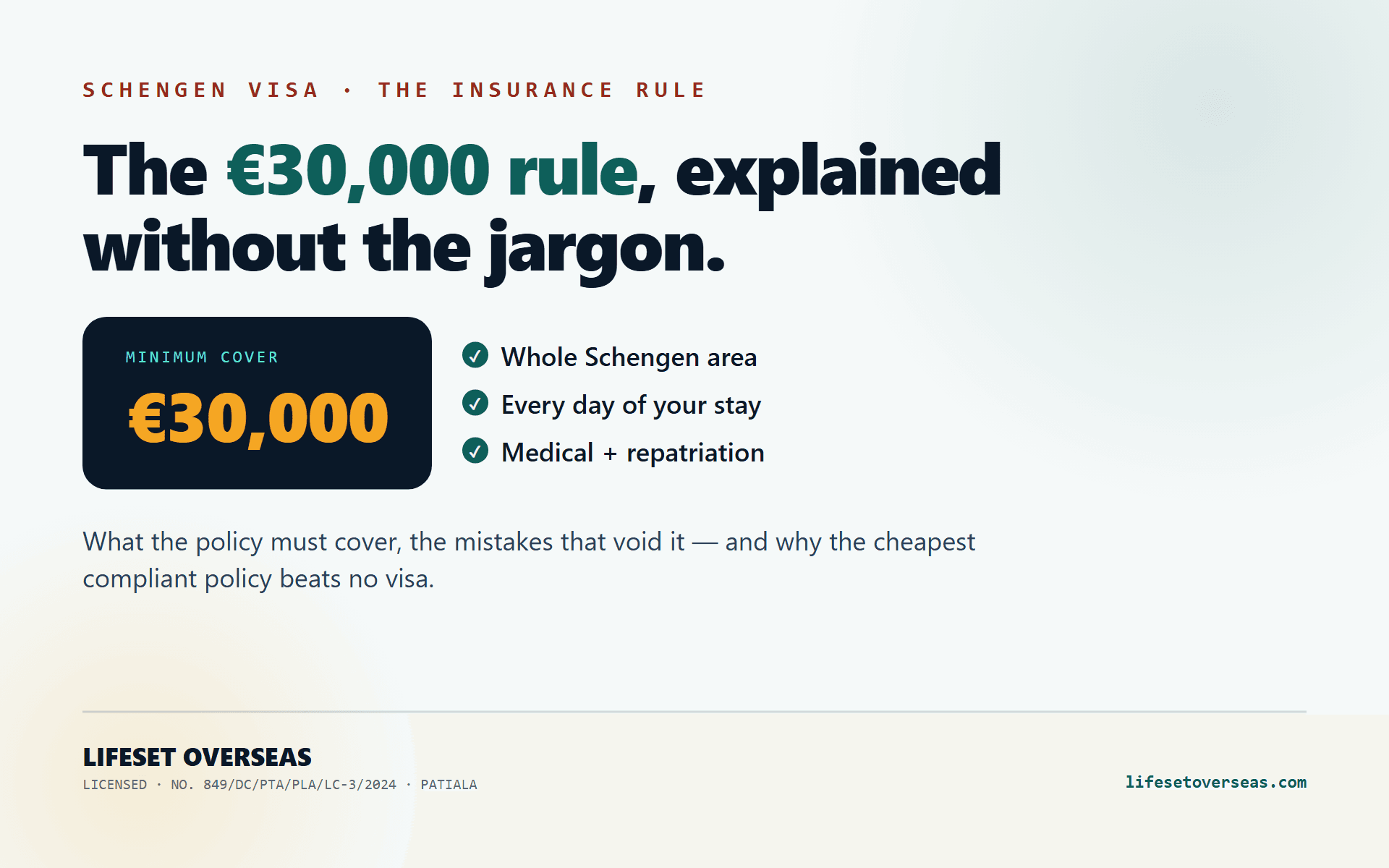
€30,000 medical cover
Source: EU Visa Code (Regulation (EC) No 810/2009), Art. 15: as of mid-2026; verify on the official EU site before filing
The logic is simple and, honestly, fair: a visitor hospitalised in Vienna or Barcelona should not become an unpaid bill for that country's health system. The insurance answers that question before the visa is ever printed.
The three tests every policy must pass
A policy is Schengen-compliant only when all three hold at once:
What a Schengen-compliant policy must do
Minimum coverFor emergency medical treatment and hospitalisation
€30,000
RepatriationCover for medical repatriation, and repatriation of remains in the worst case
Included
TerritoryAll member states. Not just the country you applied to
Entire Schengen area
PeriodEvery day of the trip, first entry to final exit
Your entire stay
EU Visa Code requirements, your consulate's checklist prevails
That last row is where files stumble. A policy covering 1–10 May against flights of 28 April–12 May is not "mostly fine". It is non-compliant, and it hands the officer a contradiction. The consulate reads the policy dates against the itinerary; so should you, before submission.
The mistakes we see repeatedly
Dates that don't match the itinerary. The trip gets extended by two days, the flights are rebooked, the insurance is forgotten. The cheapest fix in the entire visa process, many insurers amend dates in minutes, and still a gap we keep seeing at our desk.
A policy that isn't Schengen-compliant. A generic "overseas travel plan" or a domestic health policy with foreign cover is not automatically compliant. The policy certificate should state Schengen compliance, the €30,000 minimum, and validity across all Schengen states: in writing, on the certificate the consulate will read.
Buying it after the appointment. The insurance belongs inside the file at submission. Applicants who plan to "add it later" arrive at the counter with an incomplete file, and as our VFS guide explains, the submission clock only starts when the file is complete.
Insuring only the main destination. Cover for "France" alone fails the territory test on a trip that touches Switzerland for a day. The policy must say Schengen-wide.
If the visa is refused, is the premium lost?
Often not: but read before you buy. Many insurers offer a full or near-full refund of the premium when a visa is refused and the policy is unused, typically against the refusal letter. This is an insurer's policy term, not a legal right, so check the cancellation clause before purchase: a two-minute check that turns the premium from a gamble into a refundable cost. Where the policy allows free date changes too, one purchase can survive a rescheduled trip.
Where this fits in your file
The insurance certificate is one row in a larger story (itinerary, funds, employment, ties), and it is the row most within your control. Get the dates right, get the compliance statement in writing, and it becomes the one document the officer never has to think twice about. For the rest of the file, our country guides list what each consulate expects, and the free Visa Readiness Score will show you the gaps before any fee changes hands. It will not predict a decision, no honest tool can, but it will make sure the avoidable mistakes stay avoided.
Frequently asked questions
Does travel insurance improve my chances of getting the visa?
No: and be careful with anyone who implies it does. Compliant insurance satisfies a mandatory requirement; it does not add merit. A file without it is incomplete, but a file with it is simply complete. The decision always rests with the visa officer.
Can I use my company's group insurance or an existing health policy?
Only if the insurer certifies, in writing, that the cover meets the Schengen tests above: €30,000 medical minimum, repatriation included, valid across all Schengen states for your exact travel dates. Consulates read the certificate, not your HR portal. When in doubt, a purpose-built Schengen policy avoids the argument entirely.
I'm applying for a multiple-entry visa: do I need insurance for every future trip now?
At application you insure the first planned trip; for later trips under a multiple-entry visa, applicants typically declare they will hold compliant insurance for each subsequent visit. That is the general Visa Code position as of mid-2026: verify your consulate's exact instructions before filing, and actually buy the cover each time you travel.
Where should I buy the policy: India or Europe?
Either can work, as long as the policy passes the compliance tests and the certificate is in a language the consulate accepts. Many applicants at our desk use established Indian insurers with named Schengen products, because refund-on-refusal terms and rupee premiums are easier to manage from Patiala. The insurer matters less than the certificate's wording.
Pro Lifeset Overseas Pvt Ltd is a Government of Punjab licensed consultancy (Licence No. 849/DC/PTA/PLA/LC-3/2024), Nabha Road, Patiala. We advise on study, visitor and settlement visas, never work permits, and no consultant, including us, can guarantee a visa: that decision always rests with the visa officer.
What to do next
Done-for-you visitor visa filing
We file the whole tourist, family or business visa for you — from ₹4,999 all-in · GST included.
We never predict an outcome or promise a visa. We tell you what your file says and what can be fixed.
Talk to a consultant about your case
Read this article? Now tell us about your situation.
We’ll WhatsApp you within 4 working hours with an honest read on your file and the realistic next steps. Licensed, fixed-fee, and one consultant from first call to decision.
Read the article? Message us on WhatsApp with your situation — a consultant from our Punjab-licensed consultancy gives you an honest read and the next step.