
 Spain visa guide
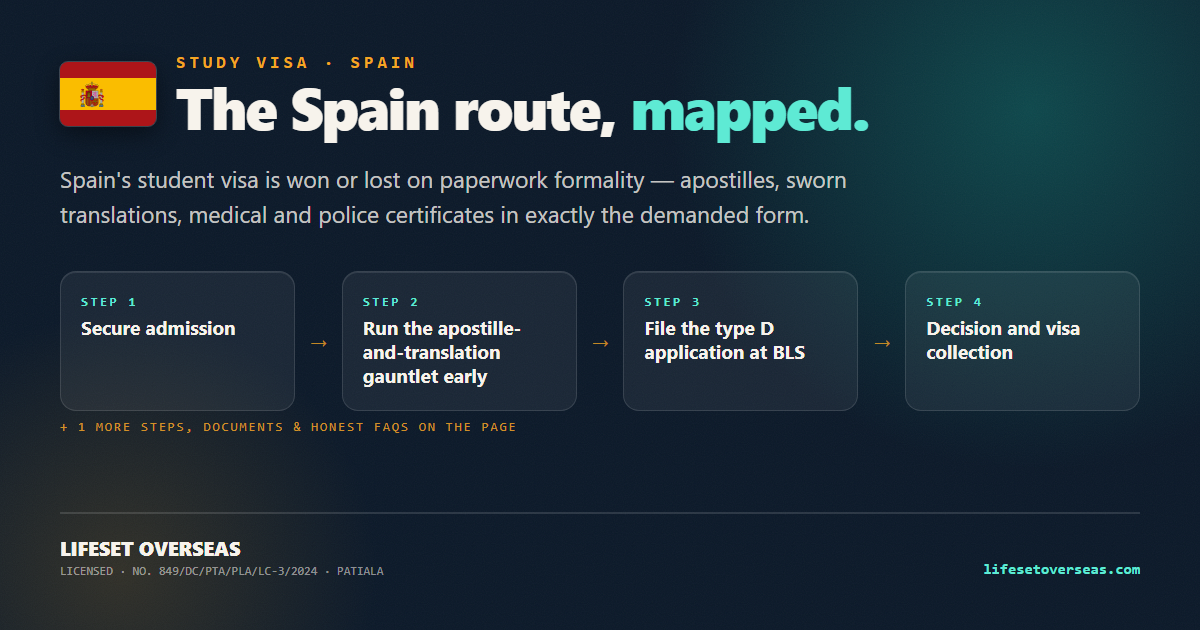
The destination where paperwork IS the exam
Every country checks documents; Spain grades them. The consular list is explicit: Indian certificates carry Hague apostilles, translations come from a sworn traductor jurado, the medical certificate uses the expected wording, the police clearance is fresh and apostilled too. Files fail here not because students are unqualified but because the gauntlet was started three weeks too late.
So the Spain strategy is unglamorous and decisive: sequence the paperwork backwards from the appointment date. Apostilles through the MEA take time; sworn translations queue behind them; some certificates expire while others are being made. We run this as a project plan with dates, because that is what it is.
Two Spains, two budgets
The Spain of famous low tuition is the public, Spanish-taught system: genuinely affordable, and a strong choice if you build the language. The Spain most Indian applicants actually buy is English-taught master's programmes, concentrated in private universities and business schools at private-sector prices. Both are legitimate; confusing them is how budgets break. The consulate's funds reference is tied to an official index revised periodically. We verify the current figure for your file.
Work rights worth knowing about
Spain's reform of student work rules moved it from restrictive to one of the friendlier Schengen positions: students can work substantial part-time hours compatible with their course. Conditions are regulation-set and move; we check the current cap rather than print one here that will quietly rot. The rule that never changes: work funds your life in Spain, never the visa file itself.
After the airport: the TIE
For programmes beyond short stays, the post-arrival TIE registration is where your legal stay actually gets documented. It has its own appointment scarcity, its own documents, its own deadline. Students who treat the visa as the finish line meet Spanish bureaucracy for the second time unprepared; ours land with the TIE checklist already in hand.
Official checklist: student visa over 90 days (Mumbai consular jurisdiction)
From our Knowledge Base (checked against the Consulate General of Spain in Mumbai, 19 September 2026; Delhi applicants should confirm the Delhi instructions):
- National visa form, photograph, passport and copies; admission to a qualifying programme with enrolment and payment evidence.
- Resources for the stay using 100 per cent of IPREM, plus 75 per cent for the first eligible family member and 50 per cent for each additional one; prepaid accommodation may be deducted.
- Sponsor undertaking, relationship and identity, PAN and original six-month bank statements signed and stamped by the bank.
- Spanish-authorised public or private health cover meeting public-system risks.
- For stays over 180 days: an adult police clearance certificate covering the countries of residence in the past five years, and a medical certificate using the 2005 International Health Regulations wording; both valid for six months.
- The India PCC from the Regional Passport Office; apostille and sworn Spanish translation for the specified documents.
"Submit at least 2 months before course start." Student-family visas do not authorise work and are requested after the principal obtains the visa. For stays over six months, apply for the TIE residence card within one month of entry.
Sources: Consulate General of Spain, Mumbai, study visa (https://www.exteriores.gob.es/Consulados/mumbai/en/ServiciosConsulares/Paginas/Consular/Visado-de-estudios.aspx); BLS International India, student visa over 90 days (https://india.blsspainvisa.com/assets/pdf/english/student-visa-more-than-90days.pdf).
Official sources
- Ministry of Foreign Affairs of Spain: https://www.exteriores.gob.es/en
- BLS International, Spain visa, India: https://india.blsspainvisa.com/
Fees and rules change; the official page always prevails. The guide above was written from our filing experience for Indian applicants; check the current requirements on the authority’s site before you book.
Verified figures for Spain
What a year in Spain costs — and what you must prove
- Public-university tuition, non-EU student, per year
- No verified figure
- Private universities: €20,000
- Funds the visa authority asks you to show
- €600 a month
English-taught courses: available but limited. varies by university
Read on the official pages below on 27 Aug 2026. Figures change every academic year — check them before you pay anything.
Where Spain stands among the 29 Schengen study countries
Computed from verified figures
The living-cost proof the residence permit asks for works out to about €600 a month, which ranks 9th-lowest of the 23 countries that publish a monthly or yearly figure. English-taught programmes exist but are limited: only 18 of the 29 countries teach widely in English, and Spain is not one of them, so the course list matters more than the country.
